Table of Contents
ToggleIf you’ve started growing plants indoors, you’ve probably noticed the dizzying array of grow light colors available, purple, blue, red, white, and everything in between. The color of your grow light isn’t just aesthetic: it directly affects how well your plants photosynthesize, develop foliage, and produce flowers or fruit. Different wavelengths trigger different plant responses, and choosing the wrong spectrum can mean leggy seedlings, poor flowering, or stunted growth. This guide breaks down which light colors matter most, how plants use them, and how to match the right spectrum to your specific indoor garden setup.
Key Takeaways
- Blue light (400–500 nm) promotes compact vegetative growth and is ideal for leafy greens and seedlings, while red light (600–700 nm) triggers flowering and fruiting in reproductive plants.
- The best grow light color for indoor plants depends on your growth stage: use blue-dominant lights (5000K+) for seedlings and vegetables, shift to red-dominant or full spectrum (3000K–4000K) once plants enter the flowering stage.
- Full spectrum white LED lights at 4000K offer the most versatile solution for mixed indoor gardens, providing all necessary wavelengths including often-overlooked green light that penetrates deeper into plant canopies.
- Evaluate grow lights by spectral output (nanometers), PPFD measurements, and spectral distribution charts rather than wattage or lumens, as these metrics actually indicate the wavelengths your plants receive.
- Common mistakes include choosing lights based on wattage alone, using only red or blue wavelengths without balance, ignoring light distance from plant canopies, and overlooking the importance of consistent daily light duration (14–16 hours for most plants).
Understanding the Light Spectrum and Plant Growth
Plants don’t see light the way humans do. While we perceive a broad range of colors, plants primarily respond to specific wavelengths within the 400–700 nanometer (nm) range, known as photosynthetically active radiation (PAR). This range includes blue light (around 400–500 nm), green light (500–600 nm), and red light (600–700 nm).
Each wavelength plays a distinct role in plant development. Blue light drives vegetative growth and compact structure, while red light triggers flowering and fruiting. Green light, often dismissed, actually penetrates deeper into the canopy than red or blue and contributes to overall photosynthesis, especially in dense foliage.
Photosynthesis rates peak in the blue and red zones, which is why many dedicated grow lights emphasize these colors. But that doesn’t mean other wavelengths are useless. Far-red light (just beyond visible red, around 700–750 nm) influences stem elongation and flowering timing. Understanding this spectrum helps you avoid buying a light that looks bright but delivers the wrong wavelengths for your plants’ needs.
When evaluating grow lights, look for products that specify their spectral output in nanometers or display a spectral distribution chart. Avoid lights marketed only by wattage or lumen output, those metrics don’t tell you what wavelengths your plants are actually receiving.
Blue Light: The Powerhouse for Foliage and Vegetative Growth
Blue light (400–500 nm) is the workhorse for leafy greens, herbs, and seedlings. It promotes compact, bushy growth by inhibiting stem elongation and encouraging strong root development. If you’ve ever grown seedlings under a standard incandescent bulb and watched them stretch into weak, spindly stalks, you’ve seen what happens without adequate blue light.
For plants in their vegetative stage, think lettuce, basil, spinach, or young tomato transplants, blue-heavy spectrums deliver the best results. Many growers use 5000K–6500K color temperature LED or fluorescent bulbs during this phase, which emit a cool white light rich in blue wavelengths.
Blue light also plays a role in chlorophyll production and stomatal opening, which regulates gas exchange and water use. That means better photosynthetic efficiency and healthier foliage overall. If you’re growing strictly for foliage, like microgreens, houseplants, or culinary herbs, a blue-dominant spectrum is often all you need.
One downside: too much blue light without sufficient red can delay flowering in photoperiodic plants. If you’re planning to bring plants from seedling to harvest, you’ll need to supplement with red wavelengths as they mature. Many home gardeners rely on dedicated fixtures that allow spectrum adjustments as plants transition between growth stages.
Red Light: Essential for Flowering and Fruiting
Red light (600–700 nm) is where the magic happens for flowering and fruiting plants. Tomatoes, peppers, cannabis, orchids, and most blooming houseplants require substantial red wavelengths to trigger reproductive growth. Red light stimulates phytochrome responses that regulate flowering time, bud formation, and fruit development.
In practice, a spectrum weighted toward red (often in the 2700K–3500K color temperature range for white LEDs, or dedicated red diodes at 630–660 nm) works best once plants enter the flowering stage. You’ll often see commercial grow lights labeled “bloom” or “flower” that emphasize red output.
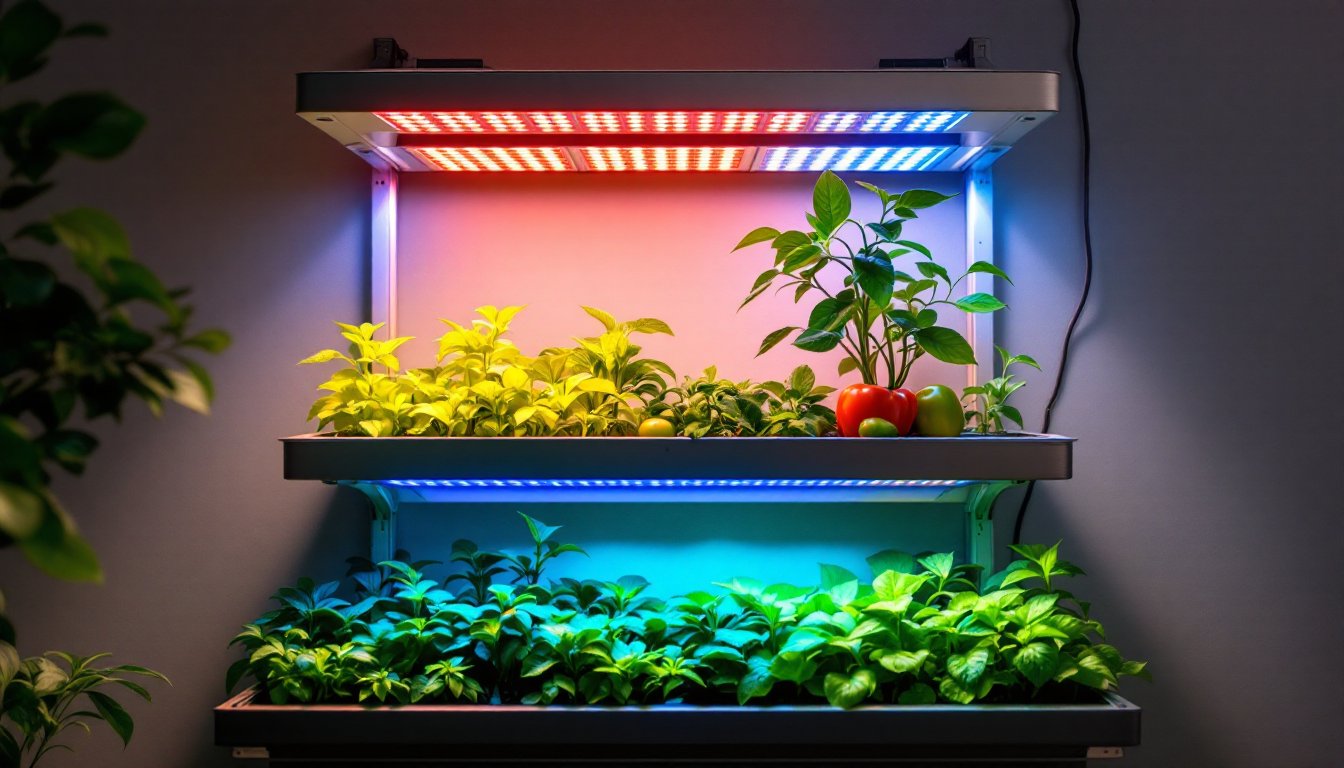
Red light also drives photosynthesis efficiently, especially when combined with blue. The classic “blurple” (blue + red) LED grow lights became popular because they deliver high PAR output in the wavelengths plants use most. But, these lights can make it hard to visually assess plant health, discoloration, pests, and nutrient deficiencies are tough to spot under magenta light.
Far-red light (700–750 nm), while technically outside the PAR range, also influences flowering. It can accelerate bloom timing and increase stem length, which is useful for certain crops but undesirable for compact indoor setups. Some advanced fixtures include far-red diodes for growers who want that extra control.
If you’re growing fruiting plants like tomatoes or peppers indoors, plan to start with a balanced or blue-heavy spectrum during early growth, then switch to red-dominant lighting once flower buds begin forming.
Full Spectrum White Light: The All-in-One Solution
Full spectrum white LEDs have become the go-to choice for most home growers, and for good reason. These lights combine blue, green, red, and sometimes far-red wavelengths into a single fixture that mimics natural sunlight. They’re easier on the eyes, make it simple to monitor plant health, and eliminate the need to swap lights between growth stages.
Full spectrum lights typically range from 3000K to 5000K color temperature. A 4000K light offers a balanced mix suitable for all stages of growth, while a 3000K skews warmer (more red) for flowering and a 5000K runs cooler (more blue) for vegetative growth. Many newer LED panels allow you to adjust the spectrum with dimmers or separate blue/red channels.
One key advantage: green wavelengths, often present in full spectrum whites, penetrate deeper into plant canopies than red or blue alone. This helps lower leaves photosynthesize even when shaded by upper foliage, improving overall plant productivity. Research has shown that small amounts of green light can actually boost growth rates compared to pure red-blue combinations.
Full spectrum lights are particularly useful if you’re growing a mix of plant types in one space, say, a shelf with seedlings, herbs, and a blooming African violet. You won’t need multiple fixtures or constant swapping. Popular designs for indoor setups include hanging panels, clip-on fixtures, and adjustable gooseneck lamps.
When shopping, look for lights rated with a PPFD (photosynthetic photon flux density) measurement rather than just lumens. PPFD tells you how many usable photons are hitting your plants per second, which is far more relevant than brightness perceived by human eyes.
Choosing the Best Grow Light Color for Your Specific Plants
Matching light color to plant type isn’t complicated once you know what you’re growing. Here’s a practical breakdown:
For leafy greens and herbs (lettuce, basil, parsley, spinach, kale):
- Use blue-dominant or full spectrum lights in the 5000K–6500K range.
- These plants stay in vegetative growth their entire lives, so red wavelengths are less critical.
- Compact fluorescent (CFL) or LED shop lights work fine and are budget-friendly.
For seedlings and transplants (tomatoes, peppers, flowers started indoors):
- Start with blue-heavy light (5000K+) to prevent leggy growth.
- Position lights 2–4 inches above seedlings and raise as they grow.
- Once true leaves develop, consider transitioning to a balanced full spectrum.
For flowering and fruiting plants (tomatoes, peppers, strawberries, citrus, orchids):
- Shift to red-dominant or full spectrum lights in the 3000K–4000K range once buds form.
- Many growers use a 4000K full spectrum for simplicity, which supports both vegetative and reproductive stages.
- Ensure at least 12–16 hours of light daily for most fruiting crops.
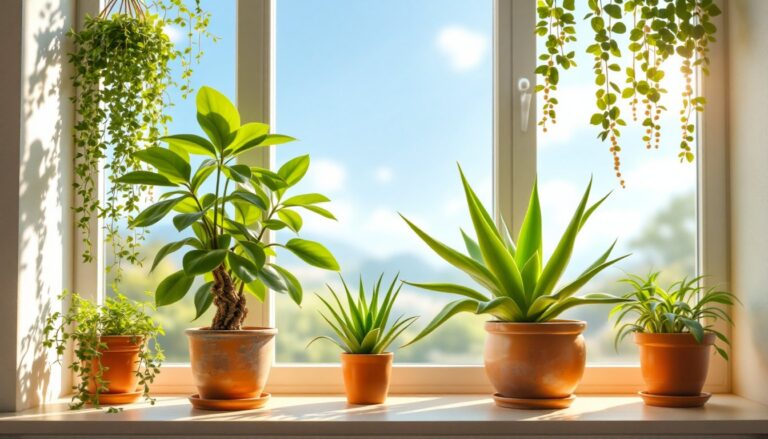
For tropical houseplants (pothos, philodendrons, snake plants, succulents):
- A full spectrum white light at 4000K works well and looks natural in living spaces.
- These plants tolerate lower light intensities, so a simple LED bulb in a desk lamp often suffices.
- Position lights 12–18 inches above foliage.
For cannabis or high-value crops (if legal in your area):
- Use dedicated grow lights with separate vegetative (blue-heavy) and bloom (red-heavy) settings.
- Advanced growers often add UV or far-red supplementation for potency and yield.
Many indoor gardening setups benefit from comprehensive design strategies that integrate lighting with humidity control, air circulation, and appropriate containers. If you’re working with limited space or mixing plant types, a quality full spectrum LED panel offers the most flexibility without needing multiple fixtures.
Common Mistakes to Avoid When Selecting Grow Light Colors
Even experienced DIYers make avoidable errors when choosing grow lights. Here are the most common pitfalls:
Buying based on wattage alone: A 100W incandescent bulb and a 100W LED deliver vastly different light spectrums and intensities. Focus on PAR output, PPFD measurements, and spectral charts instead of wattage.
Using only red or only blue light: While plants use these wavelengths most, excluding one entirely leads to problems. Blue-only setups delay flowering: red-only causes stretching and weak stems. Balance matters.
Ignoring light distance: Even the perfect spectrum won’t help if your light is too far away. Most LED grow lights need to be 6–24 inches from plant canopies depending on wattage. Too close causes bleaching: too far reduces intensity below useful levels. Measure PPFD at canopy height if possible, or follow manufacturer guidelines.
Overlooking green wavelengths: The myth that plants don’t use green light persists, but research proves otherwise. Full spectrum lights that include green improve canopy penetration and overall photosynthesis. Don’t dismiss them as wasted energy.
Forgetting about duration: Light color doesn’t matter if your plants don’t get enough hours. Most vegetables and flowering plants need 14–16 hours daily. Use a timer to maintain consistency. Seedlings can tolerate up to 18 hours, while some tropical houseplants do fine with 10–12.
Skipping the specs: Marketing terms like “plant light” or “grow bulb” mean nothing without spectral data. Reputable manufacturers publish spectral distribution graphs showing output across the PAR range. If a product doesn’t provide this, look elsewhere.
Mixing incompatible fixtures: Combining an old T5 fluorescent with a cheap blurple LED and a desk lamp creates uneven coverage and spectral gaps. Stick with one quality fixture appropriate to your space, or use identical units for uniform results. Platforms like The Spruce often review popular lighting setups for different indoor gardening scenarios.
Finally, don’t neglect other factors. Temperature, humidity, watering, and nutrients all affect plant health. The best grow light in the world won’t fix root rot or nitrogen deficiency.
Conclusion
Choosing the right grow light color comes down to understanding your plants’ growth stage and end goals. Blue light builds strong foliage, red light drives flowering and fruiting, and full spectrum white offers versatility for mixed setups or gardeners who want simplicity. Focus on spectral output data rather than marketing claims, match intensity and duration to your plant type, and avoid the common mistakes that waste money and limit results. With the right spectrum overhead, your indoor garden can thrive year-round.