Table of Contents
ToggleThose tiny black specks hovering around houseplants aren’t just annoying, they’re fungus gnats, and they’re feeding on the organic matter in potting soil. Left unchecked, a small swarm becomes a full infestation that can stress plants and spread throughout the home. The good news? Most gnat problems stem from simple watering mistakes and can be solved with straightforward DIY methods using supplies already in the pantry or available at any hardware store. This guide covers identification, root causes, effective treatments, and prevention strategies to keep indoor plants healthy and gnat-free.
Key Takeaways
- Overwatering is the primary cause of fungus gnats on indoor plants, as constantly damp soil creates ideal breeding conditions and accelerates their three-to-four-week lifecycle.
- Combat gnats with a two-pronged approach: use apple cider vinegar traps and sticky traps for adults, plus Bti soil drench or diatomaceous earth to eliminate larvae.
- Allow the top 1-2 inches of soil to dry between waterings and use bottom watering or moisture meters to prevent the moist conditions that attract gnats.
- Inspect new plants before bringing them indoors, store potting soil properly in dry conditions, and promptly remove dead leaves and debris to prevent gnat infestations.
- Choose pots with drainage holes, amend soil with perlite for better drainage, and add a half-inch layer of sand or gravel on the soil surface to create a dry barrier against gnat egg-laying.
What Are Fungus Gnats and Why Are They Invading Your Houseplants?
Fungus gnats (Bradysia and Sciaridae species) are small, dark-winged insects about 1/8 inch long that resemble fruit flies but with longer legs and a more delicate build. They’re attracted to moist organic material, specifically the decomposing plant matter and fungi in potting soil.
The adults don’t harm plants directly, but they’re a nuisance. The real damage comes from their larvae, which live in the top 2-3 inches of soil and feed on organic debris, fungi, and sometimes tender root hairs on seedlings or stressed plants. Heavy infestations can stunt growth or cause wilting in young plants.
Fungus gnats thrive in warm, humid indoor environments. They complete their lifecycle in about three to four weeks: adults lay up to 300 eggs in moist soil, larvae hatch within days, feed for about two weeks, pupate, then emerge as adults ready to repeat the cycle. This rapid reproduction is why a few gnats can quickly become dozens.
Homeowners often notice them when watering plants or see them flying near windows. They’re weak fliers and tend to stay close to the soil surface.
Common Causes of Gnat Infestations in Indoor Plants
Overwatering is the number one culprit. Constantly damp soil creates ideal breeding conditions for fungus gnats and encourages the fungal growth they feed on. Many houseplant owners water on a schedule rather than checking soil moisture, which leads to soggy conditions, especially in pots without drainage holes.
Poor drainage compounds the problem. Heavy potting mixes that retain too much moisture, or containers lacking proper drainage, keep the top layer of soil wet longer than necessary. Clay pots breathe better than plastic and help soil dry out between waterings.
Organic potting mixes high in peat moss, compost, or bark naturally contain more organic material for larvae to feed on. This doesn’t mean avoiding quality potting soil, it means managing moisture properly and considering soil health practices that balance drainage and nutrition.
Introducing infested plants or soil is another common entry point. Gnats often hitchhike in new plants from nurseries or garden centers, or they arrive in bags of potting soil stored in damp conditions. Always inspect new plants for signs of pests before bringing them indoors, and quarantine them for a week or two if possible.
Decomposing plant material left on the soil surface, dead leaves, fallen flowers, or mulch, provides additional food for larvae. Keeping the soil surface clean reduces their food supply.
Natural DIY Solutions to Eliminate Gnats from Your Home
The Apple Cider Vinegar Trap Method
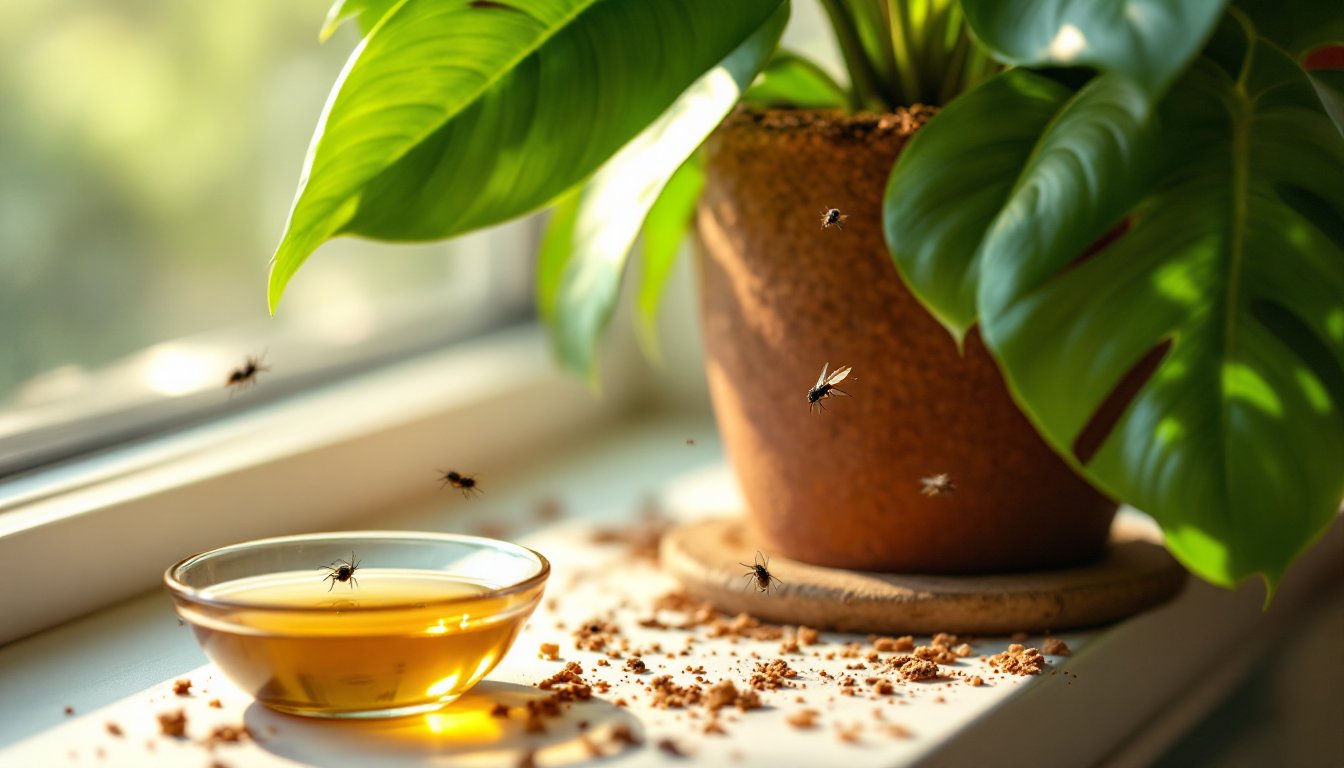
This simple trap targets adult gnats and reduces the breeding population. Fill a shallow dish or jar with 1/4 inch of apple cider vinegar and add 2-3 drops of liquid dish soap. The vinegar’s fermented smell attracts gnats, and the soap breaks the surface tension so they sink and drown.
Place traps near affected plants, one trap per plant or cluster works well. Check daily and refresh the solution every 2-3 days. While effective for adults, traps alone won’t stop the problem because they don’t address larvae in the soil. Combining vinegar traps with soil treatments creates a two-pronged approach that interrupts the lifecycle.
Alternatively, mix equal parts apple cider vinegar and water in a spray bottle and mist the soil surface lightly. The acidity can deter egg-laying, though this method is less reliable than traps.
Using Sticky Traps and Soil Treatments
Yellow sticky traps are highly effective for catching adult fungus gnats, which are attracted to the bright color. Cut traps into smaller pieces and insert them into the soil on stakes or attach them to plant supports. Replace them weekly or when covered with insects. This method works well for monitoring the severity of an infestation and reducing the adult population.
For larvae, soil drenches with Bacillus thuringiensis israelensis (Bti) are the gold standard. Bti is a naturally occurring bacterium that kills gnat larvae but is harmless to plants, pets, and people. Mix according to package directions (usually 1 tablespoon per gallon of water) and water plants thoroughly with the solution. Repeat every 5-7 days for three weeks to break the lifecycle.
Diatomaceous earth (DE) offers another soil-surface treatment. Sprinkle a thin layer of food-grade DE over the top inch of soil. This fine powder is made from fossilized algae and has microscopic sharp edges that damage soft-bodied larvae and deter egg-laying adults. DE only works when dry, so reapply after watering. Wear a dust mask when handling DE, it’s non-toxic but irritating to lungs.
Hydrogen peroxide soil drench is a quick DIY option. Mix one part 3% hydrogen peroxide with four parts water and pour it over the soil until it drains from the bottom. The solution kills larvae on contact and breaks down into water and oxygen, adding a slight aeration benefit. Use this sparingly, overuse can stress plants.
Allow the top 1-2 inches of soil to dry completely between waterings. Fungus gnat larvae can’t survive in dry conditions. For most houseplants, this won’t cause harm and actually encourages healthier root growth. Use a moisture meter or stick your finger into the soil to check before watering.
Bottom watering helps keep the soil surface dry. Place pots in a tray of water and let plants absorb moisture from the drainage holes for 20-30 minutes, then remove. This technique waters roots without creating the damp surface layer gnats need.
Preventing Future Gnat Problems: Long-Term Plant Care Tips
Prevention starts with proper watering habits. Water only when the top inch or two of soil feels dry to the touch. Different plants have different needs, succulents and cacti prefer drier conditions, while ferns and tropicals like consistent moisture but not waterlogged soil. Adjust your routine to each plant’s requirements rather than watering everything on the same schedule.
Choose pots with drainage holes and use saucers to catch excess water, emptying them within 30 minutes of watering. Standing water in saucers creates the exact conditions gnats love.
Amend potting soil for better drainage. Mix in perlite, coarse sand, or orchid bark to improve aeration and prevent compaction. A ratio of 3 parts potting mix to 1 part perlite works for most houseplants. Well-draining soil dries faster and discourages fungal growth.
Top-dress soil with inorganic material. A half-inch layer of sand, fine gravel, or horticultural grit on the soil surface creates a dry barrier that makes it harder for gnats to lay eggs and larvae to emerge. This also gives pots a clean, finished look.
Inspect new plants before purchase. Look for adult gnats flying around pots or crawling on the soil. Gently shake the plant, if gnats appear, choose a different one. When bringing plants home, isolate them for 1-2 weeks and monitor for pests before placing them with your collection. Managing plant health proactively prevents more serious problems down the line.
Clean up plant debris promptly. Remove dead leaves, spent flowers, and any organic material from the soil surface. Don’t use uncomposted mulch or fresh compost on indoor plants, stick to sterile potting mixes.
Store potting soil properly. Keep bags sealed and off the ground in a cool, dry location. Damp storage areas encourage gnats and other pests to colonize the soil before it even reaches your plants.
Improve air circulation around plants. Space them out so air can move freely, and consider using a small fan in rooms with high humidity. Better airflow helps soil dry faster and makes the environment less hospitable to gnats.
Rotate plants occasionally to ensure even light exposure and check undersides of leaves and soil regularly for early signs of pests. Catching an infestation early, when it’s just a few adults, makes treatment far simpler than waiting until hundreds of larvae are in the soil.
Conclusion
Fungus gnats are a fixable problem, not a reason to give up on houseplants. The key is addressing both adults and larvae while fixing the environmental conditions that allowed them to thrive. Adjust watering habits, improve drainage, use traps and soil treatments as needed, and stay consistent with prevention. With these strategies, indoor plants can flourish without the buzzing nuisance of gnats circling overhead.