Table of Contents
ToggleOverwatering kills more houseplants than any other mistake. That’s the brutal truth most plant parents learn after losing their third pothos or fiddle leaf fig. The problem isn’t lack of care, it’s guesswork. Sticking a finger in the soil only tells you about the top inch, and by the time leaves droop or yellow, root rot may already be underway. A soil moisture meter eliminates the guessing, giving real-time data about moisture levels several inches down where roots actually live. Whether you’re managing a single succulent or a jungle of tropicals, this simple tool can be the difference between thriving greenery and expensive compost.
Key Takeaways
- A soil moisture meter eliminates guesswork by measuring real-time moisture levels several inches deep in potting soil where roots actually absorb water, preventing root rot and overwatering disasters.
- Analog meters ($8–$15) offer simplicity and durability with no batteries needed, while digital models ($15–$60+) provide faster readings, data logging, and adjustable sensitivity for larger plant collections or specialized tracking.
- Proper soil moisture meter technique requires inserting the probe at root depth (two-thirds of pot height), waiting 60 seconds for analog or 10–20 seconds for digital readings, and testing multiple spots in large pots to avoid false readings.
- Different plants have distinct moisture preferences—succulents thrive at dry readings (1–3), while ferns and tropical plants prefer consistently moist soil (6–8)—making a moisture meter essential for customized watering without treating every plant the same.
- Multi-function meters claiming to measure moisture, pH, and light are unreliable for pH and light; buy a dedicated soil moisture meter and use separate tools for other metrics to ensure accuracy.
What Is a Soil Moisture Meter and How Does It Work?
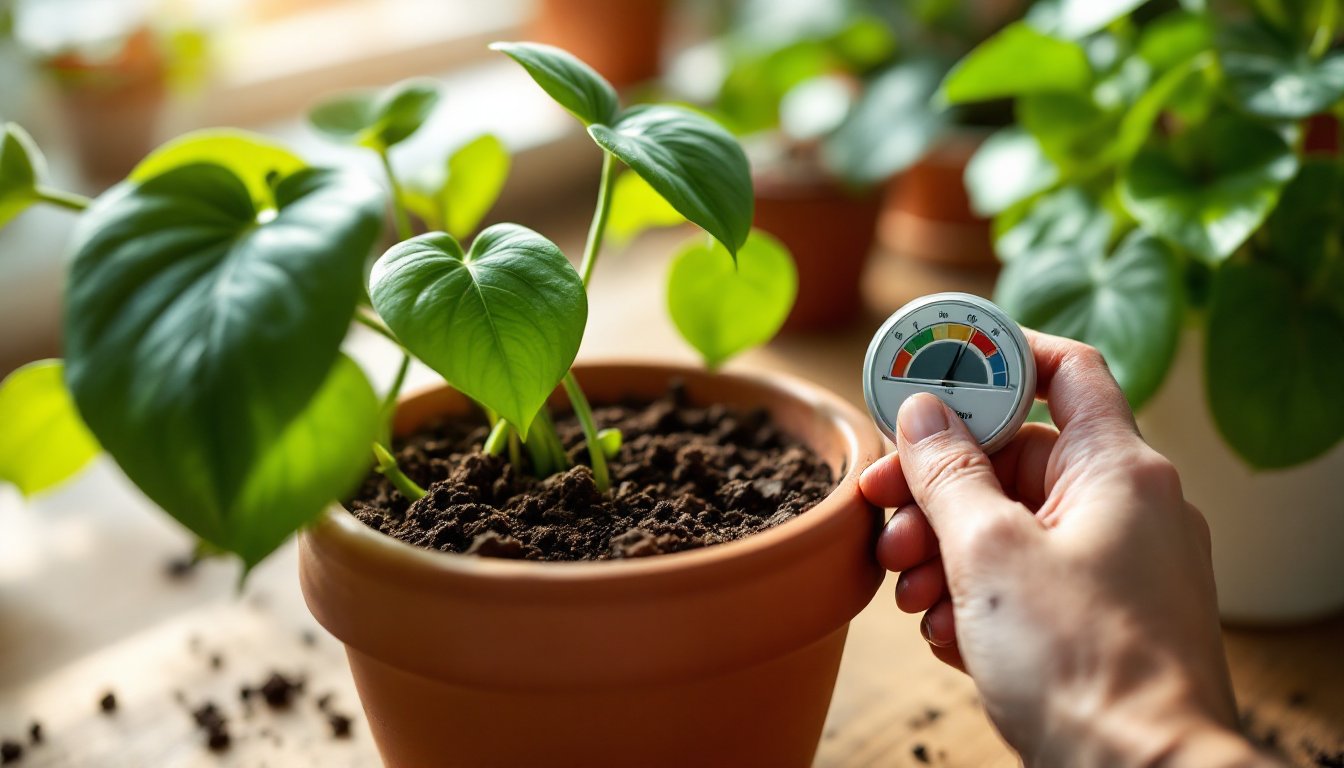
A soil moisture meter is a handheld device with a metal probe that measures the water content in potting soil. Insert the probe into the soil, and the meter displays moisture levels on a scale, typically numbered 1–10 or marked as dry/moist/wet.
Most consumer models use electrical resistance or capacitance to detect moisture. Analog meters rely on two metal probes creating a weak electrical circuit: water in the soil conducts electricity, and the meter measures resistance to indicate wetness. More water equals lower resistance and a higher reading. Digital versions often use capacitance sensors that measure changes in electrical charge caused by moisture without direct electrical contact, which reduces corrosion over time.
Neither type requires batteries for basic analog models, though digital meters do. The probe length matters, 6 to 8 inches is standard for most indoor pots, reaching the root zone where moisture matters most. Cheaper models might only read surface moisture, which can be misleading if the top is dry but the bottom is waterlogged.
One important note: These meters measure moisture, not nutrients or pH, even though some three-in-one models claiming all three functions. The pH and nutrient readings on budget combo meters are notoriously unreliable. Stick to dedicated tools for those metrics if accuracy matters.
Why Every Indoor Plant Parent Needs a Moisture Meter
Visual cues lie. A dry surface doesn’t mean dry roots, and wilted leaves could signal either drought or drowning. Moisture meters remove the guesswork, especially in situations where traditional methods fall short.
Large or deep pots are prime candidates. A 12-inch planter can stay bone-dry on top while holding saturated soil at the bottom, exactly where roots sit. Finger-testing won’t reach that depth. Meters give you data from the root zone, preventing both underwatering and the root rot that comes from hidden saturation.
Inconsistent watering schedules get easier to manage. If you travel, forget to water, or hand off plant care to someone less experienced, a meter provides objective readings instead of relying on memory or intuition. According to comprehensive home improvement guides, houseplant care becomes significantly more consistent when growers rely on measurable data rather than observation alone.
Different plant needs also complicate watering. Succulents prefer dry conditions (meter readings of 1–3), while ferns and calatheas thrive in consistently moist soil (readings of 6–8). A meter lets you customize watering without treating every plant the same.
Seasonal changes throw off routines, too. Winter heating dries air but slows plant growth, reducing water uptake. A meter adjusts your watering to actual need, not calendar dates.
Types of Soil Moisture Meters for Houseplants
Analog Moisture Meters
Analog meters use a mechanical dial with a needle that swings across a numbered or color-coded scale. No batteries, no calibration, no fuss. Insert the probe, wait 60 seconds, read the dial. They’re the most affordable option, typically running $8–$15.
The two-probe design is standard: galvanized steel or stainless steel prongs spaced about half an inch apart. Electrical resistance between the probes drives the needle. Pros: durable, instant readout, no digital components to fail. Cons: probes corrode over time if left in wet soil, and accuracy degrades with heavy use. Wipe probes clean after each use and avoid leaving them inserted.
Analog meters work best in standard potting mixes, peat, coir, perlite blends. Dense clay or chunky orchid bark can give inconsistent readings. The needle might also stick or drift if the internal spring wears out, though this usually takes years of regular use.
Digital Moisture Meters
Digital meters display moisture levels on an LCD screen, often with backlit numbers or bar graphs. Capacitance sensors are common here, measuring electrical field changes rather than direct resistance. This reduces probe corrosion and can improve longevity.
Price ranges from $15 for basic single-probe models to $50+ for multi-function units with Bluetooth connectivity or data logging. Higher-end versions may include temperature sensors or app integration, letting you track moisture trends over time, useful if you’re dialing in care for finicky specimens.
Digital meters usually require AAA or button-cell batteries. Readings appear faster (often within 10–20 seconds), and some models offer adjustable sensitivity for different soil types. The step-by-step watering guide emphasizes checking your meter’s manual for soil-specific calibration settings, which digital models handle more gracefully than analog versions.
Downside: electronics can fail, batteries die mid-season, and cheaper models have unreliable sensors that drift out of accuracy. If you’re only managing a few plants, analog simplicity often wins. For serious indoor gardeners tracking dozens of pots, digital features justify the cost.
How to Use a Soil Moisture Meter Correctly
Using a moisture meter is straightforward, but technique matters. Poor probe placement or rushing the reading leads to bad data and bad watering decisions.
Step-by-step process:
-
Insert the probe midway between the stem and the pot edge, angling slightly toward the center. Avoid hitting roots directly or jamming the probe against the pot wall, both skew readings.
-
Push the probe down to root depth, typically two-thirds of the pot’s height. For a 10-inch pot, that’s about 6–7 inches deep. Surface readings are useless: roots drink from the middle and bottom.
-
Wait 60 seconds for analog meters, 10–20 seconds for digital. Moisture needs time to register. Pulling the probe early gives false dry readings.
-
Read the scale. Most meters use a 1–10 range: 1–3 is dry, 4–7 is moist, 8–10 is wet. Some use color bands (red/green/blue) instead. Know your plant’s preference, succulents want low numbers, tropicals prefer mid-range.
-
Remove and clean the probe immediately. Wipe with a dry cloth or rinse with water, then dry thoroughly. Leaving probes in soil invites corrosion and throws off future readings.
-
Test multiple spots if the pot is large (over 12 inches). Soil moisture can vary surprisingly within the same container, especially if watering was uneven or the pot has poor drainage.
Common mistakes to avoid:
- Don’t water based on one reading. Check again in a different spot to confirm.
- Don’t leave the probe inserted for continuous monitoring, it’s not designed for that and will corrode.
- Don’t use a meter in bone-dry soil immediately after purchase. Water lightly first: meters struggle to read completely desiccated media.
- Don’t assume identical readings mean identical needs. A cactus at “5” needs water: a fern at “5” might still be fine.
Safety note: No PPE required, but wash hands after handling soil and probes. Potting mix can harbor mold spores or bacteria, especially in overwatered pots.
Choosing the Right Moisture Meter for Your Indoor Plants
Not all meters suit all situations. Match the tool to your collection size, pot types, and how much precision you actually need.
For beginners or small collections (under 10 plants): A basic analog meter with a 6-inch probe is plenty. Look for stainless steel probes to resist rust, and a clear dial with color zones. Budget $10–$15. The simplicity keeps you from overthinking it, and there’s no battery maintenance.
For larger collections (10+ plants) or varied species: A mid-range digital meter with a longer probe (8–10 inches) handles deeper pots and gives faster readings. Spend $20–$30. Features like auto-shutoff save battery life, and backlit screens help in dim corners where plants often live. Models with separate probe tips (replaceable if damaged) add value.
For serious indoor gardeners or rare plant collectors: High-end digital meters with data logging or app connectivity justify the $40–$60 cost if you’re optimizing care for expensive or temperamental specimens. Track moisture trends, set reminders, and compare readings across different media types. Some models include temperature sensors, which help diagnose issues like cold root zones slowing water uptake.
Probe length matters. Standard 6-inch probes work for most houseplants in 6- to 10-inch pots. Go with 8–10 inch probes for floor plants in 12-inch or larger containers, think fiddle leaf figs, monstera, or large palms.
Material considerations: Stainless steel probes outlast galvanized or bare steel, especially in consistently moist environments. Check for a sealed probe connection on digital models: moisture creeping into the electronics ruins the unit.
Multi-function meters (moisture/pH/light) sound appealing but underperform. The pH readings are wildly inaccurate compared to proper soil test kits, and light meters are too imprecise for practical use. Buy a dedicated moisture meter and separate tools for other metrics if needed. Seasonal home improvement projects often emphasize choosing specialized tools over all-in-one gadgets for this exact reason.
Calibration: Most consumer meters don’t allow user calibration. If accuracy drifts (usually after a year or two of heavy use), replacement is cheaper than repair. Store meters in a dry place between uses to extend lifespan.
Final consideration, do you actually need one? If you’re managing common, forgiving plants like pothos, snake plants, or philodendrons in small pots, a finger test or lifting the pot to feel weight might be enough. Meters shine when stakes are higher: expensive plants, large containers, or species with narrow moisture tolerances where mistakes cost money and heartbreak.