Table of Contents
ToggleLarge house plants do more than fill empty corners, they establish visual hierarchy, improve air quality, and make rooms feel finished. Unlike small potted plants that get lost on shelves, statement greenery anchors a space and draws the eye upward, especially in rooms with high ceilings or open floor plans. For DIYers comfortable handling heavy pots and adjusting watering schedules, large plants offer impact without the commitment of permanent fixtures. They’re movable, seasonal, and forgiving if you need to rearrange furniture. This guide covers selection, care, and placement strategies for homeowners ready to go big with indoor greenery.
Key Takeaways
- Large house plants establish visual hierarchy and improve air quality while anchoring open-concept spaces without requiring permanent fixtures or renovations.
- Larger plants with bigger root systems and soil volumes retain moisture longer and typically require less frequent watering than small pots, making them ideal for busy homeowners.
- Species like dracaenas, ZZ plants, and pothos thrive in low-light environments, while snake plants, rubber trees, and monsteras excel with moderate to bright indirect light depending on your room’s exposure.
- Large plants eliminate clutter from multiple small pots and offer flexibility for renters and homeowners since they’re reversible design investments with no patching or permits required.
- Success depends on matching ceiling height (leave 12–18 inches clearance), considering pot weight and floor capacity, measuring light exposure with a meter app, and planning for biennial repotting of 40–60 pound containers.
- Proper care involves checking soil moisture 2–3 inches deep rather than following fixed schedules, monthly leaf dusting for light absorption, balanced fertilizing every 4–6 weeks during growing season, and rotating pots regularly for even growth.
Why Large House Plants Are Perfect for Modern Homes
Open-concept layouts and minimalist design trends leave plenty of vertical real estate unused. Large house plants fill that gap without requiring drywall anchors, framing, or contractor involvement. A fiddle-leaf fig or monstera deliciosa reaching 5–8 feet tall becomes architectural detail, softening hard edges from exposed beams or tall windows.
From a practical standpoint, bigger plants often demand less frequent watering than small pots. Larger root systems and soil volumes retain moisture longer, reducing the risk of drying out between your work trips or busy weekends. Many large specimens, rubber trees, dracaenas, snake plants, tolerate neglect better than finicky tropicals that need daily misting.
Air quality is another consideration. NASA’s Clean Air Study identified several large-leafed species (pothos, peace lilies, palms) as effective at filtering VOCs from paint, furniture, and flooring. One 10-inch pot won’t turn your living room into a forest, but three or four strategically placed large plants contribute measurably to indoor air exchange, especially in newer, tightly sealed homes.
Finally, large plants eliminate the clutter of multiple small pots. Instead of arranging ten 4-inch succulents on a windowsill, a single bird of paradise or parlor palm delivers visual weight and simplifies maintenance. For renters and homeowners alike, they’re reversible design investments, no patching, painting, or permit paperwork required.
Best Large House Plants for Beginners
Low-Light Large House Plants
Not every room has south-facing windows or skylights. If you’re working with north-facing exposures or interior corners, prioritize species adapted to forest understories.
Dracaena varieties (corn plant, dragon tree, Janet Craig) tolerate low to moderate light and grow 4–10 feet indoors. They handle irregular watering and don’t demand high humidity. Wipe dust off the long, strap-like leaves monthly to keep photosynthesis efficient.
Pothos (Epipremnum aureum) is often grown in hanging baskets, but trained on a moss pole or trellis, it becomes a vertical statement reaching 6+ feet. It thrives in dim hallways and bathrooms, though growth slows without bright indirect light.
ZZ plants (Zamioculcas zamiifolia) store water in thick rhizomes, making them nearly drought-proof. They max out around 3–4 feet and tolerate fluorescent office lighting, ideal for basements or interior rooms with minimal natural light.
Cast iron plant (Aspidistra elatior) earned its name by surviving Victorian parlors heated with coal. It grows slowly but steadily to 2–3 feet, tolerating low light, temperature swings, and inconsistent watering. Not flashy, but bulletproof.
Easy-Care Statement Plants
If you have moderate to bright indirect light, these species reward minimal effort with dramatic presence.
Snake plants (Sansevieria trifasciata) grow upright to 4 feet, with stiff, architectural leaves. Water every 2–3 weeks in warmer months, monthly in winter. They tolerate low light but grow faster near windows. Overwatering is the only common failure, let soil dry completely between waterings.
Rubber trees (Ficus elastica) feature glossy, paddle-shaped leaves and can reach 6–10 feet indoors. They prefer bright, indirect light but adapt to medium light with slower growth. Wipe leaves with a damp cloth to remove dust and maintain that signature sheen. Let the top 2 inches of soil dry before watering.
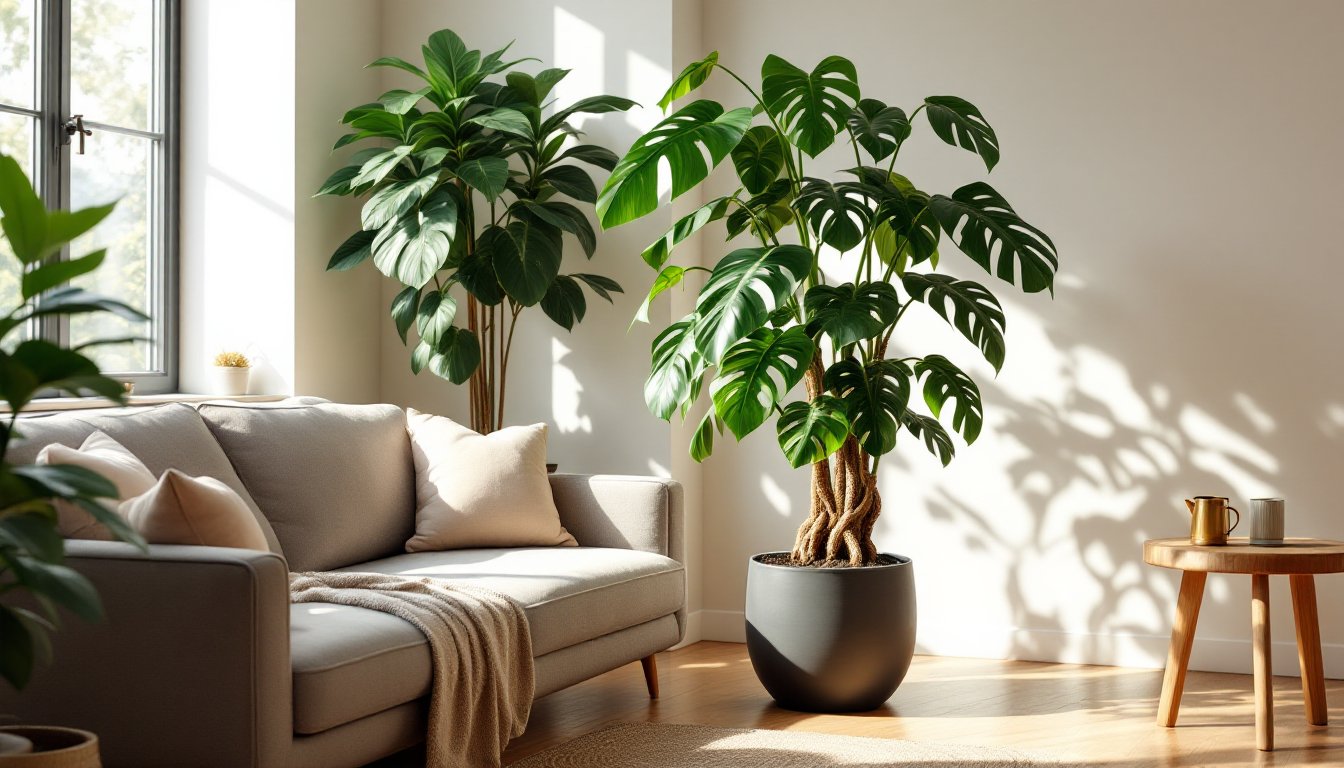
Monstera deliciosa is the Swiss cheese plant seen in design magazines. It climbs naturally, so provide a moss pole or wooden stake for support. Mature plants develop fenestrations (leaf splits) in bright indirect light. Water when the top inch of soil feels dry, and expect 6–8 feet of height with proper support.
Parlor palms (Chamaedorea elegans) grow slowly to 4–6 feet and tolerate lower light than most palms. They add tropical texture without demanding misting or grow lights. Water when the soil surface dries, and keep them away from cold drafts.
How to Choose the Right Large Plant for Your Space
Start with ceiling height and floor space. A 10-foot fiddle-leaf fig looks impressive in a room with 12-foot ceilings but overwhelms an 8-foot apartment. Measure the vertical clearance and leave at least 12–18 inches between the plant’s mature height and the ceiling to avoid a cramped look.
Consider pot diameter and weight. A mature monstera in a 14-inch ceramic pot can weigh 40–60 pounds with wet soil. If you’re placing it on hardwood or tile, use a plant dolly with locking casters for mobility. For second-floor rooms or apartments, check that the floor can support concentrated loads, most residential floors handle 40 psf live load, but confirm if you’re stacking multiple large pots in one area.
Light exposure dictates species selection. South- and west-facing windows deliver bright indirect to direct light: east-facing gives gentler morning sun: north-facing stays dim. Use a light meter app (many are free) to measure foot-candles if you’re uncertain. Low light = under 100 fc, medium = 100–500 fc, bright indirect = 500–1,000 fc.
Humidity and HVAC placement matter for tropical species. Avoid positioning plants directly over heating vents or under ceiling fans, which desiccate foliage. If your home runs below 40% relative humidity in winter (common with forced-air heating), group plants together or use a small humidifier for finicky species like calatheas or ferns.
Finally, plan for growth and repotting. Most large plants need repotting every 2–3 years. That means moving a 50-pound pot, fresh potting mix, and likely a helper. If you’re not prepared for that level of maintenance, choose slower-growing species like ZZ plants or cast iron plants.
Caring for Large House Plants: Essential Maintenance Tips
Watering large plants requires feel, not schedules. Stick your finger 2–3 inches into the soil: if it’s dry at that depth, water thoroughly until it drains from the bottom. For pots over 12 inches, use a moisture meter to check deeper zones without digging. Overwatering kills more large plants than underwatering, roots need oxygen, and soggy soil promotes rot.
Use room-temperature water to avoid shocking roots. If you’re watering a heavy pot in place, set a drain tray underneath and empty it 30 minutes after watering to prevent standing water. For pots without drainage (not recommended, but common), water sparingly and consider drilling a hole with a masonry bit if the container is ceramic or concrete.
Fertilize during the growing season (spring through early fall) with a balanced liquid fertilizer diluted to half strength. Large plants in big pots have more soil reserve, so they need less frequent feeding than small pots, every 4–6 weeks is typical. Skip fertilizer in winter when growth slows.
Dust and pest management become more important at scale. Dust blocks light and reduces photosynthesis. Wipe large leaves with a damp microfiber cloth monthly. For plants with many small leaves (palms, ferns), rinse them in the shower or outside with a gentle hose spray.
Inspect for spider mites, mealybugs, and scale during watering. Pests spread faster on large plants because there’s more surface area to hide. Treat infestations early with insecticidal soap or neem oil, following label directions. Isolate affected plants to prevent spread.
Pruning and training maintain shape and size. Use clean bypass pruners to remove dead or yellowing leaves at the base. For climbing plants like pothos or monstera, secure vines to a moss pole with soft plant ties or jute twine. Don’t use wire or tight ties that cut into stems as they thicken.
Rotate pots 90 degrees every few weeks to ensure even light exposure and prevent lopsided growth. This is easier with a plant dolly but manageable by hand for lighter setups.
Creative Placement Ideas to Maximize Impact
Corner anchors are the most common use case, and for good reason. A tall plant in an empty corner softens the junction of two walls and draws the eye upward. Pair a narrow, upright plant like a snake plant or dracaena with a low-profile pot to keep the footprint tight.
In open-concept spaces, use large plants as natural room dividers. A row of three matching palms or rubber trees in identical pots creates visual separation between a living area and dining zone without blocking sightlines or requiring drywall. Space them 24–36 inches apart for a semi-permeable screen.
Flanking entryways or large furniture creates symmetry. Place matching fiddle-leaf figs on either side of a sofa, fireplace, or doorway for a classic, balanced look. This works best in formal or transitional interiors where interior design trends emphasize symmetry and proportion.
For rooms with high ceilings, choose specimens that grow tall and narrow, bird of paradise, corn plant, or bamboo palm. These rooms with high ceilings benefit from vertical greenery that fills the upper third of the wall plane without crowding the floor.
Layering heights adds depth. Position a large floor plant behind a mid-sized potted plant on a stand, then a small trailing plant in front. This creates a tiered effect that feels intentional, not cluttered. Vary leaf shapes and textures, pair broad monstera leaves with feathery fern fronds and spiky snake plant blades.
Bathrooms and kitchens with adequate light (and space) benefit from humidity-loving large plants. A 4-foot parlor palm or pothos on a plant stand thrives near a shower or sink, where ambient moisture supports growth. Just ensure the pot has drainage and isn’t sitting in standing water.
Avoid placing large plants where they obstruct traffic flow, HVAC returns, or emergency egress. Building codes (IRC) require clear exit paths, and even non-structural design should prioritize safety. If a pot forces people to squeeze past furniture or blocks a door swing, relocate it.