Table of Contents
ToggleFungus gnats are one of the most frustrating indoor plant pests. Those tiny black flies swarming around potted plants aren’t just annoying, they’re a sign that larvae are feeding on organic matter in the soil, and in heavy infestations, they can damage delicate root systems. The good news? Fungus gnats are manageable with the right combination of gnat killers and cultural practices. This guide walks through proven solutions, from natural remedies to chemical controls, and explains how to use them effectively so houseplants can thrive without the constant buzz of pests.
Key Takeaways
- Fungus gnats thrive in moist soil and reproduce rapidly—up to 300 eggs per adult—making early identification and consistent treatment with proven gnat killers essential to prevent full-blown infestations.
- Bti (Bacillus thuringiensis israelensis) mosquito dunks are the gold-standard organic gnat killer for indoor plants, requiring three applications spaced 5–7 days apart to break the reproductive cycle.
- Overwatering is the primary culprit behind fungus gnat problems; letting the top 1–2 inches of soil dry out between waterings and using well-draining potting mixes dramatically reduces pest risk.
- Combine multiple gnat control methods—such as pairing soil drenches with sticky traps and diatomaceous earth—to hit gnats at different life stages for faster, more effective results.
- Prevention through proper plant care, including isolating infested plants, removing the top soil layer before treatment, and maintaining good air circulation, is easier and more reliable than dealing with established infestations.
Understanding Fungus Gnats and Why They Love Your Houseplants
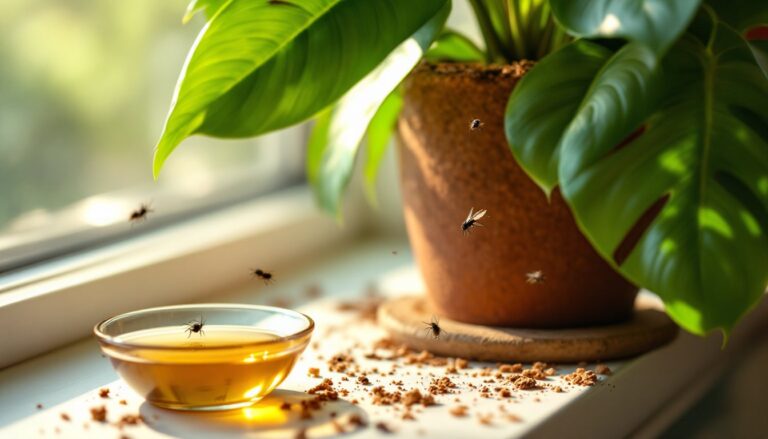
Fungus gnats (Bradysia species) are small, dark-winged flies, about 1/8 inch long, that thrive in moist, organic-rich environments. The adults are mostly a nuisance, but the real problem is their larvae. These translucent, thread-like larvae live in the top 2–3 inches of potting soil, feeding on fungi, decaying plant matter, and sometimes tender roots.
Houseplants create ideal conditions for fungus gnats. Overwatering is the primary culprit: constantly damp soil encourages fungal growth and organic decomposition, which is exactly what larvae need to survive. Potting mixes high in peat moss, coconut coir, or compost retain moisture longer and provide plenty of food for developing gnats.
Adult gnats lay up to 300 eggs in their short lifespan, usually about a week. Eggs hatch in 4–6 days, and larvae spend roughly two weeks feeding before pupating and emerging as adults. That rapid lifecycle means a small problem can spiral into a full-blown infestation in a matter of weeks if left unchecked.
Identifying fungus gnats early is key. Look for adults flying up when plants are watered or moved, or check the soil surface for tiny larvae. Unlike fruit flies (which hang around overripe produce), fungus gnats stick close to plant pots and are most active around damp soil.
Best Gnat Killers for Indoor Plants: Proven Solutions
Natural and Organic Gnat Killers
Bacillus thuringiensis israelensis (Bti) is the gold standard for organic fungus gnat control. This naturally occurring soil bacterium produces toxins that specifically target gnat larvae without harming plants, pets, or beneficial insects. Bti is available as granules, liquid concentrates, or mosquito dunks, small donuts that dissolve slowly in water.
To use Bti, break up a mosquito dunk and soak pieces in a watering can (one dunk treats several gallons). Water plants as usual: the Bti-infused water kills larvae on contact as it soaks through the soil. Repeat every 5–7 days for three cycles to break the reproductive loop. Mosquito dunks are especially useful for larger indoor plant collections or self-watering pots.
Neem oil works as both a soil drench and foliar spray. The active compound, azadirachtin, disrupts insect growth and reproduction. Mix 2 tablespoons of cold-pressed neem oil with a gallon of water and a few drops of insecticidal soap (as an emulsifier). Drench the soil to target larvae, and lightly spray the soil surface to deter egg-laying adults. Neem has a strong odor, so ventilation helps. Reapply every 7–10 days.
Hydrogen peroxide is a fast-acting option that kills larvae and aerates soil. Use a 3–4% solution (the standard drugstore variety is 3%). Mix one part hydrogen peroxide to four parts water and drench the soil thoroughly. The solution fizzes as it breaks down, releasing oxygen that kills soft-bodied larvae while oxidizing organic matter. Let soil dry between treatments.
Sticky traps, yellow cards coated with adhesive, catch adult gnats before they reproduce. Place traps at soil level, near the base of pots. They won’t solve an infestation on their own, but they reduce the adult population and help monitor severity. Replace traps when fully covered.
Diatomaceous earth (DE) is a powder made from fossilized algae with microscopic sharp edges. Sprinkle food-grade DE in a thin layer across the soil surface. It dehydrates larvae and adults that come into contact with it. DE loses effectiveness when wet, so reapply after watering. Always wear a dust mask when applying, DE is non-toxic but irritating to lungs.
Chemical Gnat Control Options
When natural methods aren’t cutting it, chemical insecticides offer faster knockdown. Pyrethrin-based sprays are derived from chrysanthemum flowers and are effective against adult gnats. Spray soil surfaces and the underside of lower leaves where adults rest. Pyrethrins break down quickly under UV light, so they’re best for indoor use. Many formulations also contain piperonyl butoxide (PBO), which boosts effectiveness.
Imidacloprid is a systemic insecticide available in granular or liquid form. It’s absorbed by plant roots and moves through the vascular system, killing larvae that feed on roots or fungi in treated soil. Apply granules to the soil surface and water in, or drench with a liquid solution. Effects last 8–12 weeks. Imidacloprid is highly effective but should be used cautiously around edible plants or if pets have access to pots.
Spinosad is another option, a naturally derived insecticide that targets larvae. It’s OMRI-listed for organic use but still potent. Mix according to label directions and apply as a soil drench. For persistent infestations, gardeners sometimes alternate between mosquito dunks and pyrethrin sprays to hit both larvae and adults.
Always read and follow label instructions. Wear gloves and eye protection when mixing or applying chemical treatments, and keep treated plants away from children and pets until dry.
How to Use Gnat Killers Effectively on Houseplants
Effective gnat control isn’t just about choosing the right product, it’s about timing, coverage, and consistency. Start by isolating infested plants to prevent adults from spreading to healthy pots. Inspect all nearby plants: gnats often move between pots, especially in grouped displays.
Before applying any treatment, remove the top 1/2 inch of soil if possible. This layer contains the highest concentration of eggs and young larvae. Discard it in a sealed bag, don’t compost it. Replace with fresh potting mix or a layer of coarse sand or fine gravel, which dries quickly and makes it harder for adults to lay eggs.
When using soil drenches (Bti, neem, hydrogen peroxide, or chemical solutions), water plants lightly first so soil is evenly moist. Then apply the treatment until it drains from the bottom of the pot. This ensures even distribution and contact with larvae throughout the root zone. Avoid drenching bone-dry soil, which can cause runoff and uneven coverage.
Treat on a regular schedule. Fungus gnat lifecycles overlap, so a single application rarely eliminates an infestation. Plan for at least three treatments spaced 5–7 days apart to catch larvae as they hatch. Mark treatment dates on a calendar or use a phone reminder.
Combine methods for faster results. Pair a soil drench (like Bti) with sticky traps to reduce the adult population, or follow a hydrogen peroxide flush with a top dressing of diatomaceous earth. Layering defenses hits gnats at multiple life stages.
Monitor progress by checking sticky traps and inspecting soil. If adult numbers drop significantly after two weeks, treatments are working. If not, reassess watering habits or consider switching products, resistance is rare, but sometimes environmental conditions (like very organic, moisture-retentive soil) limit effectiveness.
Preventing Future Gnat Infestations in Your Indoor Garden
Prevention is easier than cure. The single most effective strategy is adjusting watering habits. Let the top 1–2 inches of soil dry out completely between waterings. Stick a finger into the soil or use a moisture meter to check before watering. Most houseplants tolerate slight drying better than constant moisture, and dry surface layers discourage egg-laying.
Choose well-draining potting mixes. Blends with perlite, coarse sand, or bark chips dry faster and hold less water at the surface. Avoid heavy, peat-based mixes that stay soggy. For moisture-loving plants like ferns, top-dress with 1/4 inch of horticultural sand or fine gravel to create a dry barrier.
Use pots with drainage holes. Standing water in saucers or cache pots creates perfect gnat habitat. Empty saucers within 15–20 minutes of watering. If using self-watering pots, monitor reservoir levels and avoid overfilling.
Inspect new plants before bringing them indoors. Fungus gnats often hitchhike in nursery soil. Quarantine new arrivals for 1–2 weeks and watch for signs of gnats. If spotted, treat immediately before integrating plants into the main collection.
Bottom watering can help reduce surface moisture. Place pots in a tray of water and let soil absorb moisture from the bottom up. This keeps the top layer drier, making it less attractive to gnats. It’s particularly useful for African violets, succulents, and other plants sensitive to wet foliage.
Rotate plants occasionally and increase air circulation with a small fan. Stagnant air and crowded plants trap humidity near soil surfaces. Better airflow speeds drying and makes the environment less hospitable.
Avoid over-fertilizing. Excess organic matter from fertilizer runoff feeds fungi and gnats. Use controlled-release fertilizers or dilute liquid feeds to half-strength, and flush pots with plain water every few months to prevent buildup.
Finally, keep the growing area clean. Remove fallen leaves, spent flowers, and debris from pot rims and saucers. Decaying organic matter on the soil surface is a gnat magnet. For ideas on maintaining a healthy indoor plant environment, resources like Gardenista and The Spruce offer detailed plant care guides.
Conclusion
Fungus gnats are a nuisance, but they’re beatable with the right approach. Whether using Bti mosquito dunks, neem oil, hydrogen peroxide, or targeted chemical treatments, consistency and proper application make all the difference. Pair gnat killers with smart watering habits and preventive measures, and those tiny pests won’t stand a chance. Houseplants deserve a pest-free home, and with these tools, they’ll get it.