Table of Contents
ToggleIndoor foliage plants aren’t just decoration, they’re living air filters, mood boosters, and space dividers that demand less fuss than flowering varieties. If someone’s tired of repainting or can’t swing a major renovation, strategically placed greenery changes the entire feel of a room for the cost of a few pots and bags of soil. No drywall dust, no permits, and unlike that accent wall trend from 2019, plants never go out of style. This guide covers everything from bulletproof beginner options to statement giants that anchor a living room, plus the practical care details that keep them thriving instead of turning brown by next month.
Key Takeaways
- Foliage plants for indoor spaces require less maintenance than flowering varieties while improving air quality and transforming room aesthetics without renovation costs.
- Beginner-friendly foliage plants like pothos, snake plants, and spider plants tolerate low light and irregular watering, making them ideal for any home environment.
- Low-light foliage plants such as cast iron plants and dracaena thrive in north-facing rooms and spaces far from windows with minimal supplemental lighting.
- Large statement foliage plants like monstera and fiddle leaf fig anchor rooms visually but require consistent conditions—bright indirect light, proper drainage, and stable placement.
- Overwatering is the primary threat to foliage plant health; check soil moisture before watering and ensure drainage holes to prevent root rot and yellowing leaves.
- Tropical foliage plants benefit from grouped placement to increase humidity, weekly leaf rotation to prevent lopsided growth, and monthly pest inspections to maintain vigor.
Why Choose Foliage Plants for Indoor Spaces
Foliage plants focus energy on leaf production rather than blooms, which translates to year-round visual impact without the constant deadheading or feeding schedule flowering plants demand. Their varied textures, from waxy monstera splits to velvety calathea stripes, add architectural interest that plain walls can’t match.
Most foliage varieties tolerate lower light and irregular watering better than their flowering cousins. That makes them practical for north-facing rooms, windowless bathrooms, or anyone who travels frequently. A pothos or snake plant won’t sulk and drop buds if watering day gets skipped.
From an air quality standpoint, NASA’s Clean Air Study identified several foliage plants (spider plant, dracaena, peace lily) as effective at filtering common VOCs like formaldehyde and benzene from indoor air. One plant per 100 square feet provides measurable improvement, though it won’t replace proper ventilation.
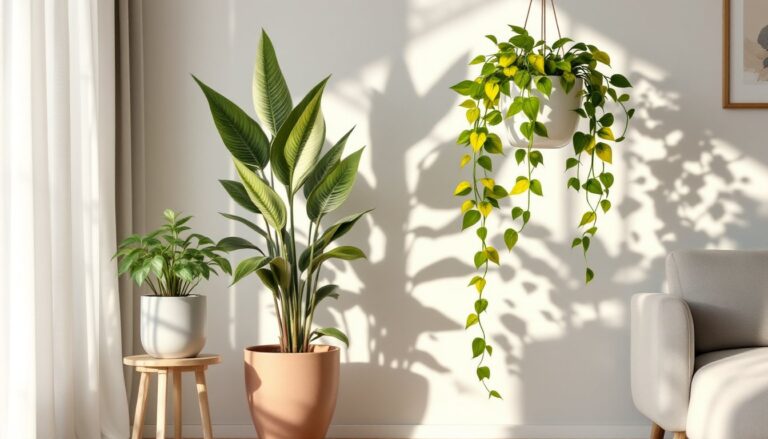
Placement flexibility is another advantage. Trailing pothos work as living curtain rods over windows: upright snake plants fit tight corners: bushy ferns soften hard-edged furniture. They solve design problems the same way trim work does, by breaking up visual monotony and directing the eye.
Best Foliage Plants for Beginners
Pothos (Epipremnum aureum) tops every beginner list for good reason. It tolerates low light, survives missed waterings, and propagates easily from stem cuttings dropped in water. The vines grow 6-10 feet indoors and look equally at home in hanging baskets or trained up a moss pole. Golden pothos shows variegated yellow: jade pothos stays solid green and handles even darker corners.
Snake plant (Sansevieria trifasciata) is nearly indestructible. Upright sword-like leaves reach 2-4 feet and tolerate anything from bright indirect light to dim hallways. Water every 2-3 weeks, overwatering kills these faster than neglect. The vertical form works well flanking doorways or filling dead corners where nothing else fits.
Spider plant (Chlorophytum comosum) produces arching green-and-white striped leaves and cascading baby plantlets (spiderettes) that root themselves if they touch soil. It prefers moderate light but adapts to most conditions. Mature plants in 8-10 inch pots make excellent shelf or pedestal displays.
ZZ plant (Zamioculcas zamiifolia) features glossy, waxy leaflets on upright stems that give it an almost artificial appearance. It stores water in thick rhizomes underground, so it can go 3-4 weeks between drinks. ZZ plants grow slowly to about 2-3 feet and handle low light better than most. Foolproof indoor foliage plants share similar drought-tolerant traits.
Philodendron (heartleaf variety) climbs or trails with glossy, heart-shaped leaves. It’s as forgiving as pothos but offers a different leaf shape for variety. Pinch back leggy growth to encourage bushiness.
Low-Light Foliage Plants That Thrive Indoors
“Low light” doesn’t mean no light, it typically refers to spaces more than 5-8 feet from windows or rooms with northern exposure. These plants adapted to forest floors where they receive filtered, indirect light.
Cast iron plant (Aspidistra elatior) earned its name by surviving neglect, poor light, and temperature swings. Dark green, blade-like leaves grow directly from the soil in a dense clump reaching 1-2 feet. It’s slow-growing but nearly impossible to kill.
Dracaena varieties (marginata, fragrans, compacta) offer vertical interest with striped or solid foliage on woody stems. Most grow 3-6 feet indoors and tolerate low light, though growth slows considerably. They’re sensitive to fluoride in tap water, use distilled or rainwater if leaf tips brown consistently.
Chinese evergreen (Aglaonema) displays patterned leaves in combinations of green, silver, pink, or red depending on variety. It handles low light and prefers consistently moist (not soggy) soil. Mature plants reach 1-3 feet and spread slowly.
Parlor palm (Chamaedorea elegans) brings a tropical look to dim corners without the light requirements of larger palms. It maxes out around 4 feet indoors and tolerates low humidity better than most palms. Keep soil lightly moist.
Place low-light plants where they receive ambient room light but no direct sun. A floor lamp with a daylight-spectrum LED bulb (5000-6500K) can supplement natural light in particularly dark spaces, position it 12-18 inches from foliage and run it 8-10 hours daily.
Statement Foliage Plants for Bold Interior Design
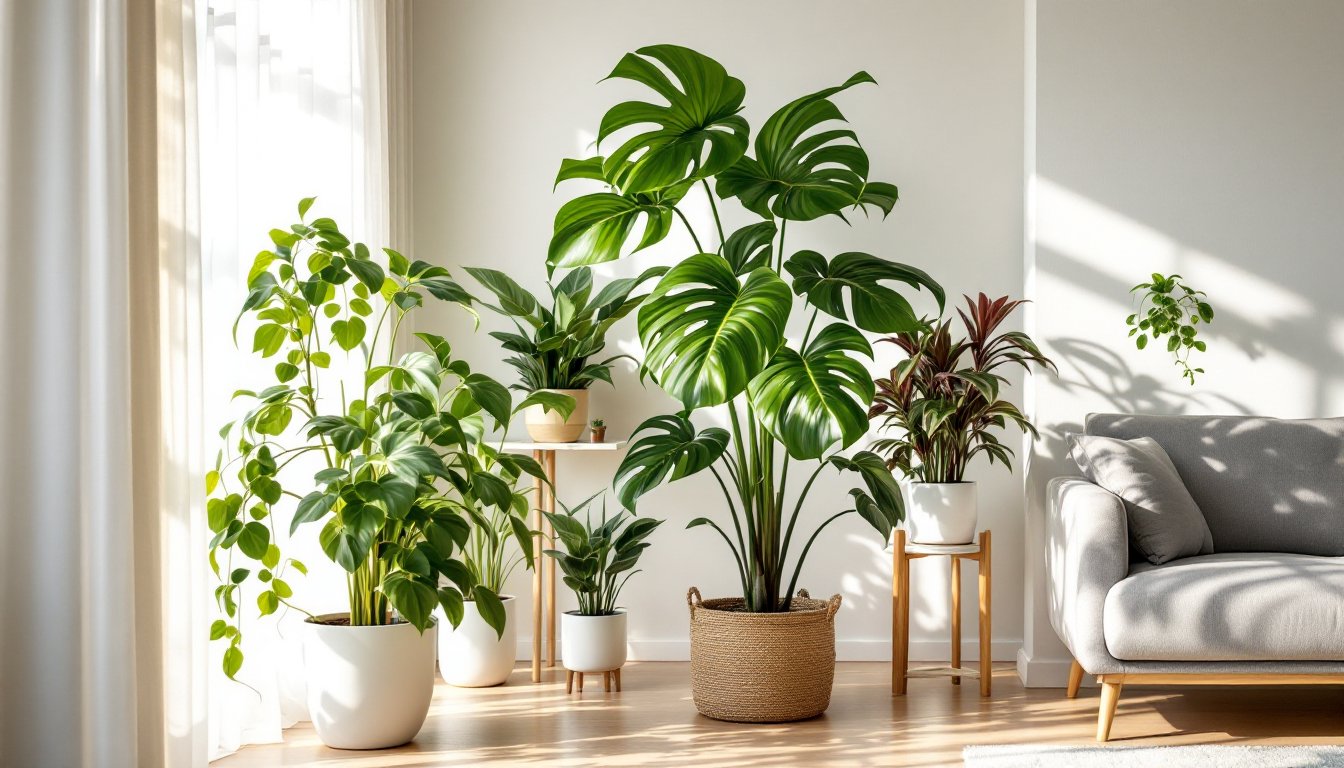
Large-scale foliage plants anchor rooms the way a sofa or dining table does. They require floor space and higher ceilings but deliver major visual impact.
Monstera deliciosa (Swiss cheese plant) produces massive split and perforated leaves that can span 2-3 feet on mature plants. It climbs naturally, so provide a moss pole or trellis for support. Bright indirect light and weekly watering during growing season keep it vigorous. Mature plants in 14-16 inch pots can reach 6-8 feet indoors.
Fiddle leaf fig (Ficus lyrata) features oversized, violin-shaped leaves on a single or branched trunk. It’s finicky about consistency, pick a spot with bright, indirect light and don’t move it. Water when the top 2 inches of soil dry out. Expect 5-7 feet of height with proper care. Wipe leaves monthly with a damp cloth to maintain gas exchange.
Bird of paradise (Strelitzia reginae or nicolai) produces large, paddle-shaped leaves that unfurl from a central point. The nicolai variety (giant bird of paradise) grows taller (6-10 feet indoors) than reginae. Both need bright light and consistent moisture. They’re heavy feeders, use a balanced liquid fertilizer monthly during spring and summer.
Rubber plant (Ficus elastica) grows thick, glossy leaves on a sturdy central trunk. Burgundy and variegated varieties add color beyond standard green. It tolerates medium light but grows faster in bright conditions. Prune top growth to encourage branching and a bushier shape. Top foliage houseplants like philodendrons also include large-leaf varieties suited for dramatic displays.
All large plants require 14-18 inch diameter pots minimum at maturity. Use a quality potting mix with perlite or bark for drainage, garden soil compacts too much in containers. Rotate pots a quarter turn weekly so growth stays even instead of leaning toward the light source.
Essential Care Tips for Healthy Indoor Foliage
Watering: More foliage plants die from overwatering than underwatering. Stick a finger 2 inches into the soil, if it’s dry, water thoroughly until it drains from the bottom. If it’s still damp, wait. Most tropicals prefer this cycle over constant moisture. Succulents and ZZ plants want soil to dry completely between drinks.
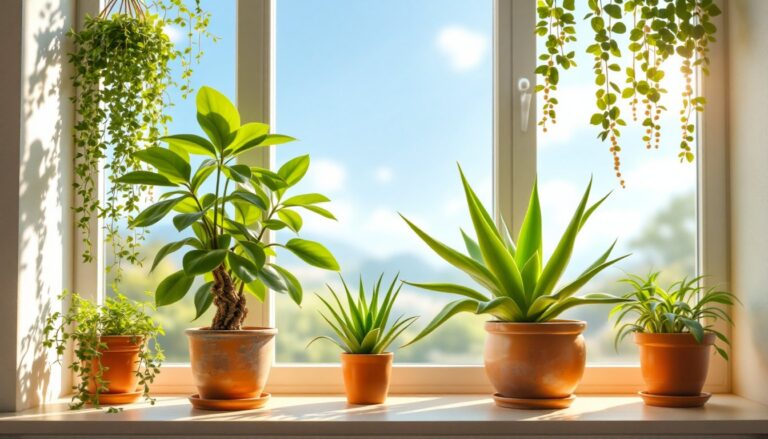
Light requirements: “Bright indirect light” means within 3-5 feet of an east or west window, or farther back from a south window with sheer curtains diffusing direct rays. “Low light” typically means north windows or 5+ feet from brighter exposures. Rotate plants weekly to prevent lopsided growth.
Humidity: Tropical foliage (calathea, ferns, alocasia) prefers 50-60% relative humidity. Most homes sit around 30-40% in winter. Group plants together to create a microclimate, run a humidifier, or set pots on trays filled with pebbles and water (bottom of pot above water line). Misting provides temporary relief but doesn’t raise ambient humidity meaningfully.
Fertilizing: Use a balanced liquid fertilizer (10-10-10 or 20-20-20 NPK ratio) diluted to half strength every 4-6 weeks during spring and summer. Skip fertilizing in fall and winter when growth naturally slows. Overfertilizing causes salt buildup and burnt leaf edges.
Repotting: When roots circle the drainage holes or growth stalls even though proper care, move up to a pot 2 inches larger in diameter. Spring is ideal timing. Use fresh potting mix and water thoroughly after repotting.
Pest prevention: Inspect new plants before bringing them home. Quarantine them for 2 weeks away from existing collections. Wipe leaves monthly to spot early signs of spider mites, scale, or mealybugs. Insecticidal soap or neem oil handles most pests if applied at first sighting.
Wear gloves when handling plants with irritating sap (philodendron, pothos, dieffenbachia). Keep toxic varieties away from curious pets and kids.
Common Problems and How to Fix Them
Yellow leaves (lower leaves only): Normal aging. Older leaves yellow and drop as the plant grows. Trim them off at the base.
Yellow leaves (widespread): Overwatering or poor drainage. Check that pots have drainage holes and soil isn’t waterlogged. Let soil dry more between waterings. If roots are mushy and smell sour, root rot has set in, trim affected roots, repot in fresh soil, and adjust watering.
Brown leaf tips: Low humidity, fluoride/chlorine in tap water, or salt buildup from overfertilizing. Increase humidity, switch to filtered or distilled water, and flush soil with plain water every few months to remove salt accumulation.
Leggy, stretched growth: Insufficient light. Move the plant closer to a window or add supplemental grow lights. Prune back leggy stems to encourage bushier growth.
Drooping leaves: Underwatering (soil bone dry, leaves crispy) or overwatering (soil soggy, leaves soft and mushy). Check soil moisture and adjust. Most plants recover from underwatering faster than overwatering.
Brown spots or patches: Fungal or bacterial infection, often from overhead watering that leaves foliage wet. Water at soil level, improve air circulation, and remove affected leaves. For persistent issues, apply a copper-based fungicide per label directions.
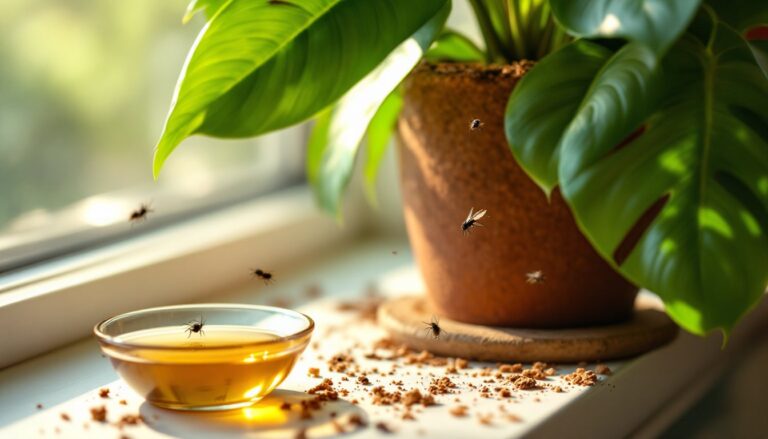
Pests (webbing, sticky residue, cottony clusters): Spider mites leave fine webbing and stippled leaves. Scale insects look like brown bumps on stems and leaf undersides. Mealybugs appear as white cottony masses. Isolate affected plants immediately. Spray thoroughly with insecticidal soap or neem oil, repeating every 5-7 days for 3 weeks to break the reproductive cycle. For heavy infestations, discard the plant to protect others.
Most issues stem from watering mistakes or light mismatches. Resources on home and garden care provide additional troubleshooting guidance for specific varieties. Adjust conditions before reaching for treatments, healthy plants resist pests and disease naturally.
Conclusion
Indoor foliage plants deliver year-round greenery without the complexity of flowering varieties, making them practical for any skill level or light condition. Start with forgiving options like pothos or snake plants, nail the basics of watering and light, then expand to statement pieces as confidence grows. The investment is minimal compared to most home improvements, and unlike paint colors or tile choices, plants can move from room to room until they find their perfect spot.