Table of Contents
ToggleChoosing the right house plant isn’t about picking the prettiest leaves at the garden center, it’s about matching plant biology to your actual living conditions. A fiddle-leaf fig won’t forgive a north-facing apartment, and a succulent collection will sulk in a bathroom. Understanding what different kinds of house plants need (and what they’ll tolerate) turns guesswork into successful indoor gardening. This guide breaks down plants by light requirements, maintenance level, air-purifying qualities, pet safety, and visual impact, so homeowners can select varieties that’ll actually thrive in their specific spaces.
Key Takeaways
- Matching plant biology to your home’s light, moisture, and temperature conditions is essential—different kinds of house plants require vastly different care routines to thrive.
- Low-light tolerant plants like snake plants, pothos, and ZZ plants survive in dimly lit spaces, while sun-loving varieties such as succulents and fiddle-leaf figs need bright, indirect light for optimal growth.
- Low-maintenance house plants like spider plants, rubber plants, and philodendrons are forgiving of inconsistent watering and irregular care, making them ideal for busy homeowners.
- Air-purifying plants including peace lilies, Boston ferns, and English ivy remove volatile organic compounds (VOCs) from indoor air, though multiple plants are needed for noticeable impact.
- Pet-safe alternatives like parlor palms, peperomia, and African violets exist for every light level, allowing pet owners to build green spaces without toxicity concerns.
- Statement plants such as Monstera deliciosa and fiddle-leaf figs transform interior design by creating focal points and filling vertical space, but require consistent care and proper placement planning.
Low-Light House Plants for Dimmer Spaces
Rooms with north-facing windows, interior hallways, or spaces more than 6 feet from a window qualify as low-light zones. These areas receive less than 50 foot-candles of light, enough for reading, but challenging for photosynthesis.
Snake plants (Sansevieria trifasciata) top the low-light tolerance list. Their thick, vertical leaves store water and chlorophyll efficiently, allowing them to survive on minimal light for months. They’ll grow slowly in dim corners but won’t die. Water every 2-3 weeks when the soil is completely dry.
Pothos (Epipremnum aureum) adapts to nearly any light level, though variegated varieties lose their color patterns in deep shade. These trailing vines work well on shelves or in hanging baskets. Pothos roots easily in water, making propagation simple, just snip a 6-inch cutting below a node.
ZZ plants (Zamioculcas zamiifolia) tolerate neglect and low light thanks to underground rhizomes that store nutrients and water. Their waxy, dark green leaves resist pests and require minimal dusting. They’re toxic if ingested, so keep them away from curious pets and kids.
Cast iron plants (Aspidistra elatior) earned their name by surviving gas lamp fumes in Victorian homes. They handle everything from low light to temperature swings to inconsistent watering. Growth is slow, expect 3-5 new leaves per year, but they’re nearly indestructible.
A common mistake: assuming low-light plants need less water. Light affects growth rate, not water needs. Always check soil moisture 2 inches down before watering, regardless of light conditions.
Bright Light Lovers: Plants That Thrive in Sunny Spots
South- and west-facing windows deliver 500+ foot-candles, the intense, direct light that sun-loving plants require for photosynthesis, flowering, and compact growth.
Succulents like Echeveria, Sedum, and Haworthia need at least 4-6 hours of direct sun daily. Without it, they stretch (etiolate) toward light sources, losing their tight rosette shape. Plant in well-draining cactus mix and water only when soil is bone-dry. Overwatering kills more succulents than any other mistake.
Fiddle-leaf figs (Ficus lyrata) demand bright, indirect light, think 3-5 feet from a sunny window. Direct afternoon sun scorches their large leaves, causing brown patches. Rotate the pot a quarter-turn weekly to encourage even growth. They’re particular about watering schedules: consistent moisture (not soggy soil) prevents leaf drop.
Crotons (Codiaeum variegatum) produce vibrant yellow, orange, and red foliage only in bright light. When considering colorful indoor plants, crotons need at least 6 hours of bright light to maintain their pigmentation. In lower light, new leaves emerge green and dull.
Jade plants (Crassula ovata) are slow-growing succulents that can live for decades with proper care. They prefer bright light and develop red-tinged leaf edges when slightly stressed by sun exposure. Water deeply but infrequently, every 2-3 weeks during growing season.
Aloe vera combines bright-light preference with medicinal benefits. The gel inside leaves treats minor burns and skin irritation. Plant in terracotta pots for better moisture evaporation and use a gritty soil mix.
If leaves fade, stretch, or lean dramatically toward windows, the plant needs more light. Consider supplementing with full-spectrum LED grow lights (40-60 watts) positioned 12-18 inches above foliage.
Low-Maintenance House Plants for Busy Homeowners
Low-maintenance doesn’t mean zero effort, it means forgiving biology and infrequent care requirements. These plants tolerate inconsistent watering, survive neglect, and don’t demand precise humidity or fertilization.
Spider plants (Chlorophytum comosum) produce cascading offshoots (spiderettes) that root easily in water or soil. They tolerate irregular watering and a range of light conditions. Brown leaf tips usually indicate fluoride or chlorine in tap water: switch to filtered or distilled water.
Rubber plants (Ficus elastica) have thick, glossy leaves that resist pests and dust buildup. They prefer bright, indirect light but adapt to medium light. Water when the top 2 inches of soil dry out, typically every 7-10 days. Wipe leaves monthly with a damp cloth to keep pores clear.
Philodendrons come in dozens of varieties, from heart-shaped Brasil to split-leaf Monstera. Most tolerate low to medium light and irregular watering. They’re fast growers, which means they recover quickly from pruning mistakes or pest damage.
Chinese evergreens (Aglaonema) handle low light, dry air, and inconsistent watering better than most tropicals. Their patterned foliage adds color without flowers. Avoid cold drafts, they’re sensitive to temperatures below 60°F.
Dracaena species (including ‘Janet Craig’ and ‘Marginata’) grow slowly and require pruning only when they outgrow their space. They filter indoor air pollutants but are toxic to pets, so placement matters.
Set a monthly calendar reminder for plant checks rather than relying on memory. Most low-maintenance plant deaths result from either chronic overwatering or complete abandonment for 6+ weeks.
Air-Purifying House Plants That Clean Your Home
NASA’s Clean Air Study identified specific plants that remove volatile organic compounds (VOCs) like formaldehyde, benzene, and trichloroethylene from indoor air. While you’d need dozens of plants to match a mechanical HVAC filter, they provide measurable benefits in enclosed spaces.
Peace lilies (Spathiphyllum) remove ammonia, benzene, formaldehyde, and trichloroethylene. They’re one of the few flowering plants that tolerate low light. White blooms appear 2-3 times per year. Water when leaves droop slightly, they’re dramatic about thirst but recover quickly. The entire plant is toxic if ingested.
Boston ferns (Nephrolepis exaltata) excel at removing formaldehyde but require high humidity (50%+ relative humidity). They’re ideal for bathrooms or kitchens. Mist daily or set pots on pebble trays filled with water. Fronds turn brown in dry air.
English ivy (Hedera helix) reduces airborne mold particles by up to 94% in controlled studies, making it useful in damp basements or bathrooms. It prefers cool temperatures (50-70°F) and medium light. Prune regularly to control growth, it’s invasive in many outdoor climates.
Areca palms (Dypsis lutescens) act as natural humidifiers, releasing moisture through transpiration. They remove formaldehyde and xylene but need bright, indirect light and consistent moisture. Mature palms reach 6-7 feet indoors.
When looking at plants for home environments with concerns about air quality, remember that air purification requires multiple plants, researchers suggest one plant per 100 square feet of floor space for noticeable impact.
Note that air-purifying plants supplement but don’t replace proper ventilation, HVAC filtration, and source control of pollutants. Address moisture issues, use low-VOC paints, and ventilate during cleaning for better indoor air quality.
Pet-Friendly House Plants for Safe Indoor Gardening
Most popular house plants contain calcium oxalate crystals or other compounds toxic to cats and dogs. Pet-safe alternatives exist for every light level and aesthetic.
Spider plants are completely non-toxic and actually attract some cats, who chew the grass-like leaves. The mild hallucinogenic effect is harmless but can make cats playful. Hang plants if chewing becomes destructive.
Parlor palms (Chamaedorea elegans) and areca palms add tropical height without pet toxicity concerns. They prefer medium to bright indirect light and consistent moisture. Brown leaf tips indicate low humidity or fluoride in water.
Peperomia varieties offer thick, textured foliage in compact sizes. They’re safe for pets and tolerate irregular watering thanks to semi-succulent leaves. Varieties include ripple peperomia, watermelon peperomia, and rubber plant-like baby rubber plant.
Calathea and prayer plants (Maranta) produce patterned leaves that fold upward at night. They’re pet-safe but require higher humidity (40%+ relative humidity) and filtered water to prevent leaf browning. Not beginner-friendly, but worth the effort for their visual interest.
African violets (Saintpaulia) bloom year-round in bright, indirect light. They’re safe for pets and prefer watering from below, set pots in a shallow tray of water for 10-15 minutes, then drain excess.
Keep toxic plants like pothos, philodendrons, ZZ plants, peace lilies, and snake plants out of reach if you have pets. Wall-mounted planters, high shelves, or closed rooms work for dedicated plant collectors.
The ASPCA maintains a searchable database of toxic and non-toxic plants at aspca.org. Cross-reference any new plant purchase before bringing it home if you have curious pets.
Statement Plants That Transform Your Interior Design
Statement plants serve as living architecture, they fill vertical space, anchor furniture arrangements, and create focal points in rooms lacking architectural interest.
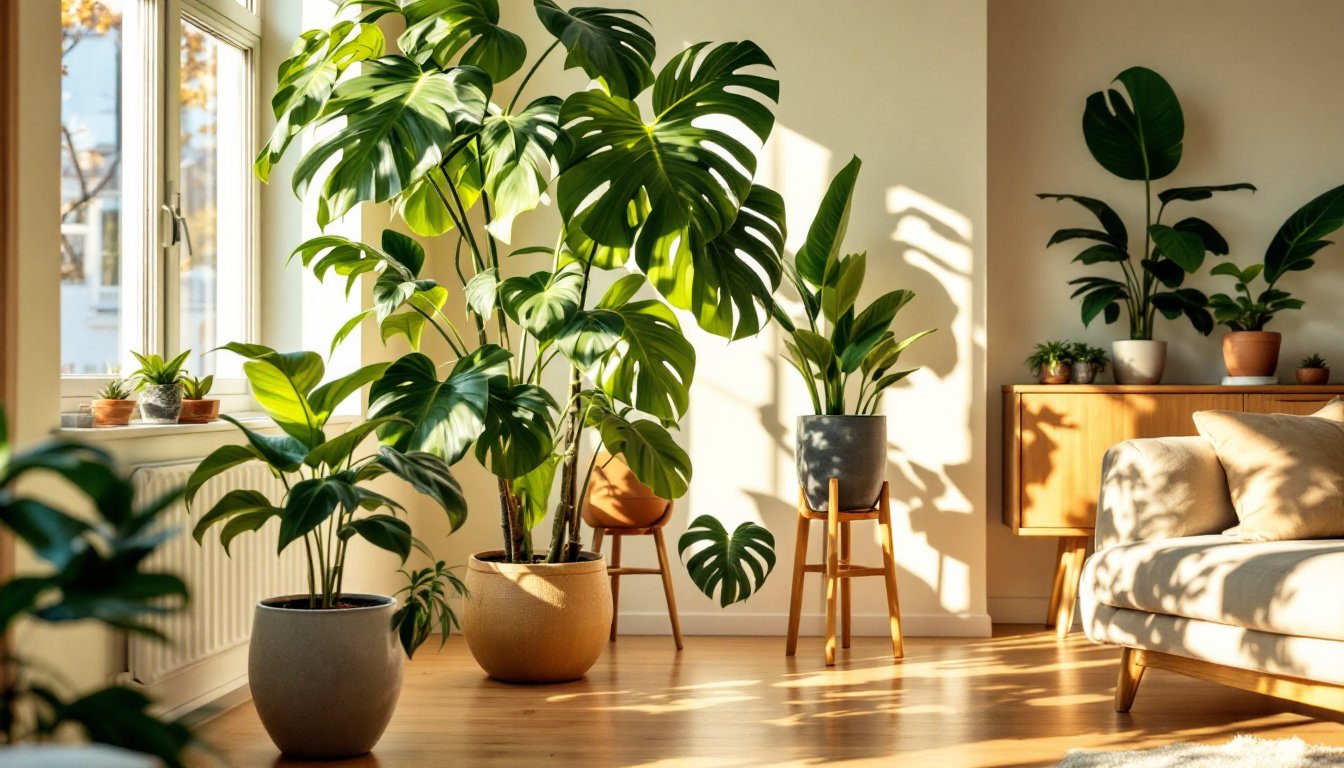
Monstera deliciosa (Swiss cheese plant) produces dramatic split leaves that can span 2-3 feet on mature plants. They need bright, indirect light and a moss pole or trellis for climbing support. Aerial roots attach to supports naturally, don’t cut them off. Water when the top 2 inches of soil dry out.
Bird of paradise (Strelitzia reginae) reaches 5-6 feet indoors with paddle-shaped leaves resembling banana plants. They require bright light, ideally a few hours of direct morning sun, to bloom. Flowering indoors is rare but possible after 3-5 years of maturity. Wipe leaves weekly to remove dust and maintain photosynthesis efficiency.
Fiddle-leaf figs remain popular for a reason: their oversized, violin-shaped leaves create instant visual impact. They’re finicky about watering, light, and relocation. Establish a consistent care routine and avoid moving the plant once it acclimates to a spot.
Rubber trees grow into substantial floor plants with proper light and occasional pruning. Their burgundy-tinted varieties add color without flowers. They’re easier than fiddle-leaf figs but still prefer consistency.
Large cacti like Euphorbia trigona (African milk tree) or Cereus peruvianus (Peruvian apple cactus) provide sculptural, low-maintenance options for bright spaces. They need minimal water (monthly during growing season) and well-draining soil.
For interior design with plants that make a statement, consider scale and proportion. A 6-foot plant in a 10×10 room feels dramatic: the same plant in a vaulted great room disappears. Use odd-numbered groupings (3 or 5 plants of varying heights) for visual balance.
Statement plants often require floor space of 2-3 feet in diameter as they mature. Plan placement accordingly, leaving clearance for doors, walkways, and furniture movement. Terracotta or ceramic pots in the 12-16 inch diameter range provide stability for top-heavy plants.
Conclusion
Successful indoor gardening starts with honest assessment of light levels, available time, and household conditions. Matching plant biology to actual living spaces prevents the cycle of buying, killing, and replacing. Start with 2-3 plants from different categories, a low-light tolerant variety, a bright-light lover, and a low-maintenance option, to learn what thrives in specific rooms before expanding a collection.